By Fatuma Kagoya
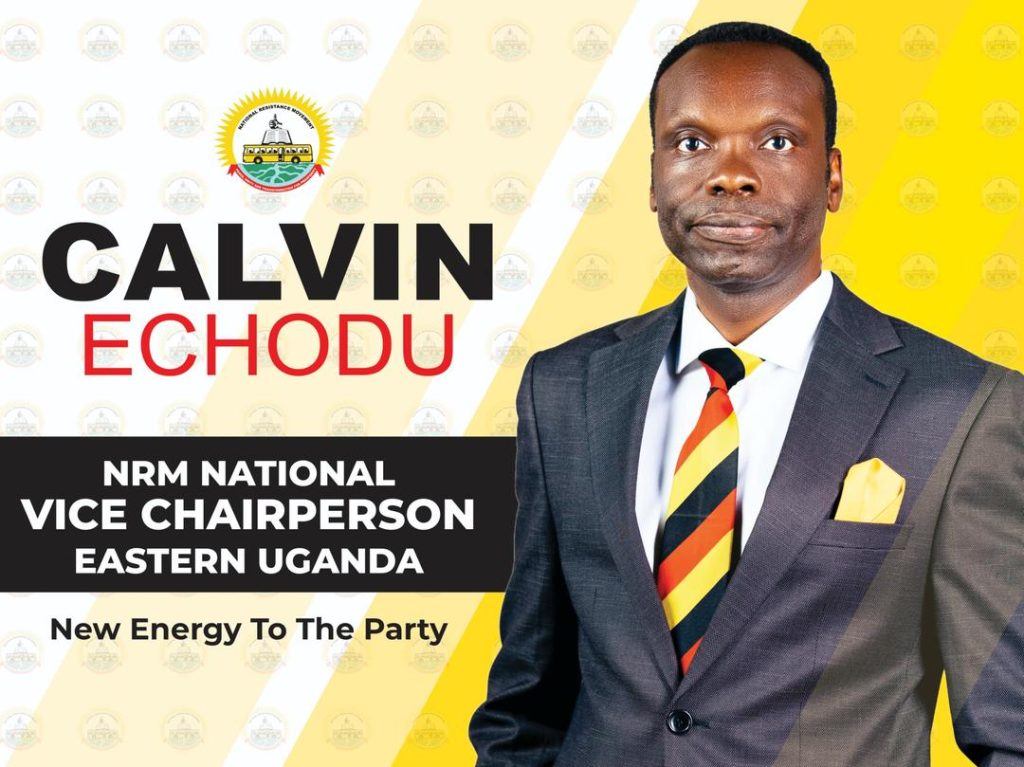
Across the hills of Sebei, the markets of Bugisu, the rice plains of Bukedi, the political battlegrounds of Busoga, and the vibrant youth spaces of Teso, one message is gaining momentum-Eastern Uganda deserves better. After years of slow decline in the NRM’s influence and rising frustration from local structures, a new voice has emerged to lead the region back to political relevance and grassroots empowerment. That voice belongs to Calvin Echodu.
For nearly two decades, the NRM’s presence in Eastern Uganda has been overshadowed by stagnation, silence, and missed opportunities. Despite occupying one of the highest regional positions in the party as CEC Vice Chairperson, Captain Mike Mukula has presided over a steady erosion of support in constituencies once considered safe for the Movement. In the last general election, the cracks became too visible to ignore.
While the NRM maintained overall dominance nationally, the political landscape in Eastern Uganda revealed a troubling shift. In Busoga, opposition support surged past 50 percent, signalling a significant change in voter sentiment. In Teso, ironically, the home region of Captain Mike Mukula, the current CEC Vice Chairperson, FDC won five parliamentary seats, highlighting the opposition’s expanding foothold.
Eastern Uganda ranked second only to the Central region in producing the highest number of opposition Members of Parliament. This trend reflects growing dissatisfaction, not with the NRM as a party, but with the regional leadership’s failure to engage meaningfully with voters and defend the Movement’s presence on the ground.
The disconnect is not ideological, it is structural. CEC is meant to supervise and animate party activity across all regions. However, under the current leadership, local leaders feel neglected, branches remain disorganized, and party offices remain inactive between elections. NRM district chairpersons often express frustration at being sidelined, with no communication from top organs. In places like Kween and Budaka, entire youth structures have collapsed, with no programs or platforms to keep them engaged between electoral cycles.
Calvin Echodu is offering a practical and deeply grounded vision to reverse this trend. A son of the region, educated both at home and abroad, he has used his private-sector acumen to run community initiatives in public health, education, and agricultural support through non-profit and faith-based models. His work has not been theoretical; it has delivered solar-powered health clinics, trauma recovery programs, and sustainable farming support in parts of Teso and beyond. He knows the region, not from political rallies, but from years of walking beside its people.
What distinguishes Echodu’s campaign is not rhetoric, but responsibility. He has openly criticized the culture of absentee leadership that only appears during elections. He argues that the NRM can no longer afford symbolic CEC representatives; it needs hands-on mobilizers who live among their people, build coalitions across district borders, and bring national policies to the village level.
At the heart of his campaign is an appeal to restore trust between the people and the party. Calvin believes that the power of the NRM lies in its structures from village chairpersons to district councils and if these are not functioning, then the party becomes vulnerable to waves of opposition, as seen in Busoga, Bugisu and Teso.
Calvin Echodu is not promising miracles. He is offering structure. He is offering discipline. He is offering a plan that involves weekly regional coordination, renewed party offices, youth business cooperatives, and digital tracking of party mobilisers to ensure accountability.
Eastern Uganda is not a weak region. It is rich in human capital, natural resources, and historical contribution to the NRM. What it lacks is deliberate, day-to-day political leadership at the top. Calvin Echodu believes that this can change and that the region can be restored to its rightful position as a pillar of national political strength.
The question is no longer whether change is needed. The question is whether Eastern Uganda will seize this moment to elect a leader who understands both the struggle and the solution. In Calvin Echodu, the region has found such a leader.
The writer is an NRM Senior cadre